
When you open the outlet of a septic tank and find a cracked or clogged plastic pre-filter, the question of replacement arises quickly. Pumice, a porous volcanic rock used as a filtering medium, has become established in individual sanitation in recent years. Its role: to retain suspended solids before they reach the distribution field. However, simply placing a bag of pumice in the tank is not enough to ensure reliable long-term operation.
Pumice pre-filter or plastic pre-filter: what changes on the ground
Plastic pre-filters equipped the majority of septic tanks for a long time. Their main flaw: they deform, break due to temperature variations, and lose their retention capacity well before the theoretical end of the tank’s life.
Pumice, on the other hand, does not deform. Its alveolar structure allows it to retain sludge and solid materials at the tank outlet without creating excessive resistance to water flow. It is observed on the ground that this mineral material withstands humidity cycles better than plastic, which explains the current trend to favor mineral media in new or renovated installations.
A guide detailing the use of pumice for septic tanks reminds us that this rock is placed just at the outlet of the tank, whether it is a classic septic tank or a multi-chamber tank. The principle remains the same: intercept particles before they migrate to the distribution pipes.
Calibration and quantity of pumice for septic tanks
You do not fill a pre-filter with just any grain size. The calibration commonly used in sanitation is in an average range, often referred to by suppliers as 20/50 (granules from 20 to 50 mm). A grain size that is too fine slows down water flow and causes backups. A grain size that is too large allows suspended solids to pass through without filtering them.
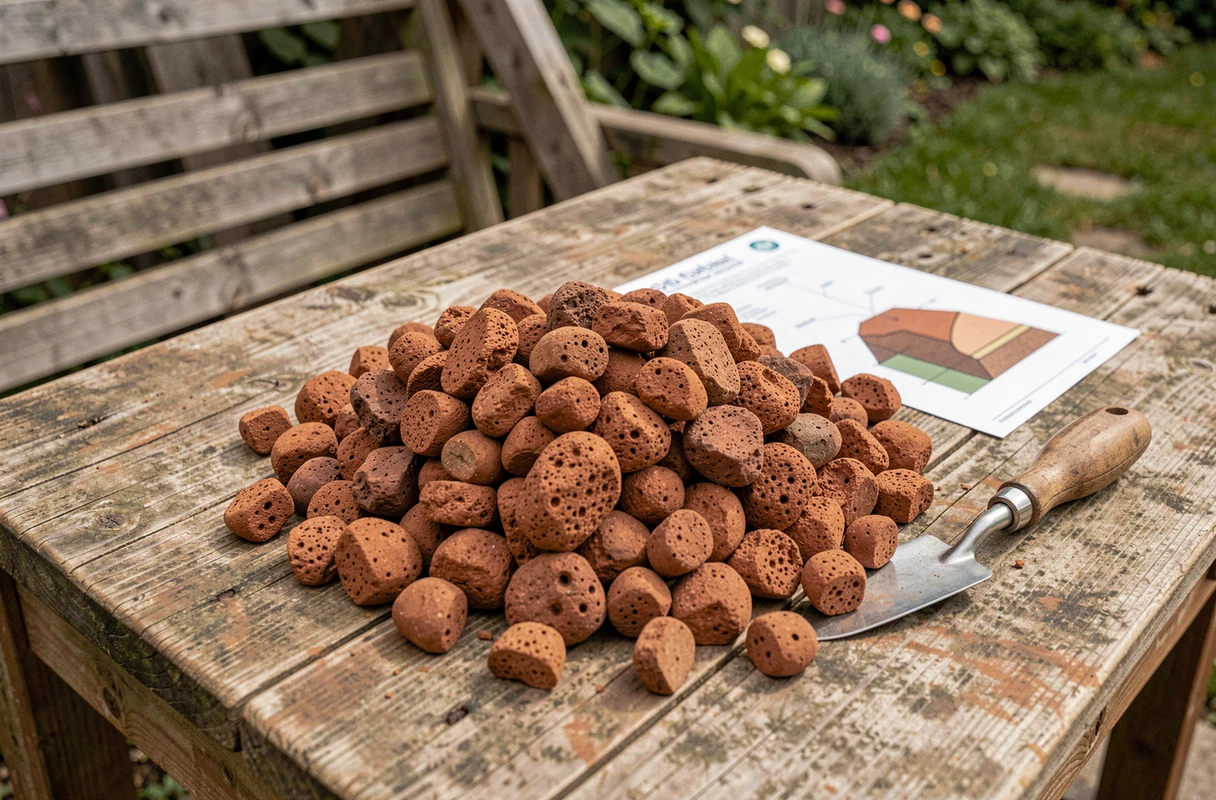
The quantity depends on the volume of the pre-filter tank integrated into the septic tank. In practice, the tank is filled until it covers the water outlet, without compacting. The pumice must remain sufficiently aerated so that water flows freely between the granules. Excessive filling or manual compaction creates exactly the problem we are trying to avoid: a hydraulic blockage at the tank outlet.
Check compatibility with your installation
Not all tanks have an integrated pre-filter tank. In older installations, the pre-filter may be a separate chamber between the tank and the distribution network. In this case, pumice is placed in a basket or net suitable for the chamber. Before any purchase, it is essential to identify the type of outlet from your tank and the configuration of the chamber.
Maintenance of the pumice filter: frequency and method
A natural material does not eliminate maintenance. This is a point that commercial speeches often overlook. Pumice gradually clogs with fats, fine sludge, and organic residues. A cleaning at least once a year is necessary to maintain filtration capacity.
The method is simple but physical:
- Remove the pumice from the pre-filter tank, by handfuls or using a bucket
- Rinse the granules with clear water, without chemicals or bleach (the bacteria in the tank depend on them)
- Visually inspect the granules: those that are crumbly or reduced to powder must be replaced
- Return the clean pumice to the tank without compacting, checking the fill level
Feedback varies on the exact frequency depending on the installations. A tank used by a large household requires more frequent checks than a secondary residence. The best indicator remains visual: if water stagnates in the pre-filter tank instead of flowing out, cleaning is overdue.
Saturated distribution field: the problem that pumice does not solve
We regularly observe homeowners who change their pumice, clean the pre-filter, and find that the problems persist. Odors in the garden, sewage backups, waterlogged soil above the trenches. In these situations, the malfunction does not come from the filter but from the downstream distribution drain.
A distribution field can clog for several reasons: clay soil that becomes impermeable, tree roots penetrating the pipes, or simply a network that is undersized for the volume of wastewater produced. Pumice limits the amount of solid materials that reach the distribution field, but it cannot compensate for an already saturated network.

Before replacing your pumice thinking it will solve a malfunction, check the signs downstream:
- Spongy soil or persistent odors above the distribution trenches
- Water backing up in the inspection chambers downstream of the tank
- Abnormally frequent tank emptying despite proper maintenance of the pre-filter
If these symptoms are present, a diagnosis of the distribution network by a sanitation professional is necessary before any intervention on the filter.
Safety during interventions on the tank
This point is systematically overlooked in consumer guides. The gases produced by the fermentation of organic materials in the tank (hydrogen sulfide, methane) are toxic and potentially explosive. Never lean over an open tank without ventilation, and never enter it alone.
When cleaning the pumice, work at the surface, arms extended, without introducing your head into the chamber. If the pre-filter tank is difficult to access, it is better to entrust the operation to a qualified provider. The cost of a one-time intervention is negligible compared to the risk of discomfort from inhaling tank gases.
Pumice remains a solid choice for pre-filtration in individual sanitation, provided the correct calibration is respected, regular cleaning is maintained, and it is not expected to correct a problem located further down the network. A clean pre-filter protects the distribution field, but only overall maintenance of the installation guarantees sustainable operation.