A home treadmill is chosen based on three lines of its technical specifications, not on the dashboard photo. The usage class, the running surface, and the maximum user weight determine the durability and comfort of the device well before the motor power. Comparing these parameters across price categories helps identify where the real performance gaps lie.
Usage class and maximum weight: the data that separates the ranges
The usage class is the first reliable filter, as it determines the robustness of the chassis, motor, and belt. The higher the class, the more the device is designed to withstand long and frequent sessions.
A device rated for occasional use but used daily exceeds its design limits. The wear of the belt accelerates, the motor heats up more, and the warranty may be questioned. Choosing the class directly above your actual usage protects the investment for several years.
The maximum user weight operates on the same logic. Taking a comfortable margin above your actual weight preserves the stability of the platform and the longevity of the running belt.
On tapis-course.net, product sheets systematically display these two parameters, making it easier to sort before comparing the rest of the features.
Running surface and cushioning: measuring the actual stride space
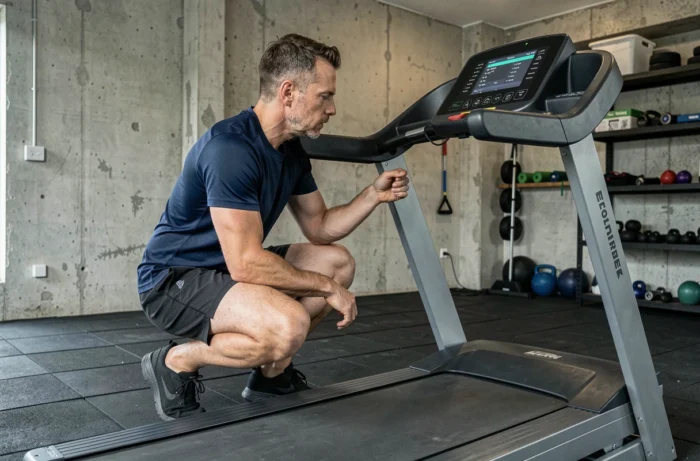
The surface of the running belt determines whether you run comfortably or unconsciously adjust your stride to stay centered. Competitors emphasize motor power, but a belt that is too narrow limits training much more than a modest motor.
The functional minimum for running is around 40 cm wide and 120 cm long. Below this, the device is suitable for brisk walking, not running. Larger individuals need a longer length to maintain a natural stride without risking stepping off the back of the belt.
How to check the surface before purchase
- Measure your natural stride while walking and then running: the belt length should exceed this distance by a good margin
- Check the usable width (excluding side rails), not the total width of the chassis advertised in the commercial title
- If you alternate walking and running in the same session, width matters more than for continuous running, as lateral movements are more frequent
The cushioning of the platform plays a different role depending on the objective. Soft cushioning protects the joints during walking or recovery jogging. On the other hand, a platform that is too soft absorbs propulsion energy and distorts the sensations for a runner preparing for a road competition. Firm cushioning better replicates outdoor running conditions.
Motor power, speed, and incline: prioritizing technical specifications
The motor power remains the most visible figure on product pages. It influences the smoothness of the belt under load, but power alone does not classify treadmills. A motor sized for occasional use does not need the same power as a model designed for sustained training, because the duration of continuous operation differs.
The maximum speed deserves a realistic examination. Most home runners do not exceed 14 or 15 km/h in regular training. A device capable of going beyond offers a reserve, but this reserve is only useful if the motor and belt can sustain this speed over time, which the usage class validates.
Incline: an underestimated cardio lever
The incline modifies the intensity of the effort without increasing speed. A few degrees are enough to engage the posterior muscles more and raise the heart rate. Entry-level models often offer manual incline (adjustable when stopped), while mid-range and high-end models include motorized incline adjustable during the session.
Motorized incline changes the nature of training: it allows programming hill intervals without interrupting the run, replicating a hilly course. For fitness and cardio-oriented use, this feature weighs more than a maximum speed surplus.
Folding treadmills and walking pads: what format for what space
Walking pads and compact folding treadmills meet a space constraint that affects a growing share of apartment buyers. These devices slide under a bed or furniture once folded, but their technical features remain limited.
- The running surface of walking pads is generally narrower and shorter than that of traditional treadmills, confining them to walking or slow jogging
- The motor power is reduced, suitable for low speeds and short sessions
- The usage class often falls among the lowest, corresponding to a few hours per week
- The cushioning is minimal on the thinnest models, increasing joint impact at high speeds
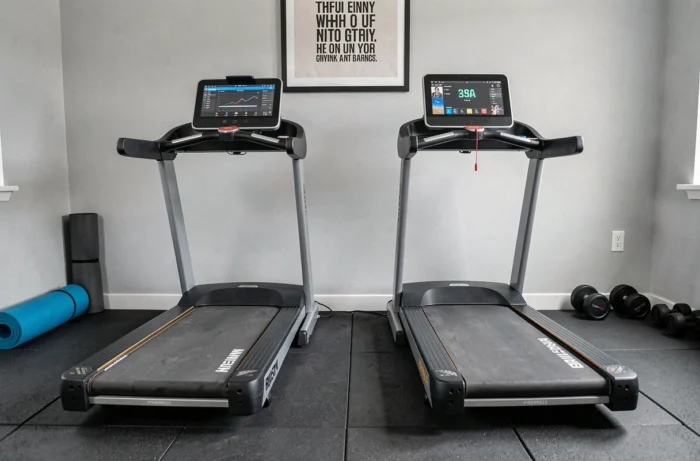
A classic folding treadmill (with uprights and console) represents a more balanced compromise. It folds vertically, frees up floor space, and retains a belt of sufficient dimensions for running. A folding device remains heavy, which requires functional transport wheels.
The choice between these formats directly depends on the available space and the type of session intended. A walking pad is suitable for daily walking activity in front of a desk. A standard folding treadmill remains the appropriate format as soon as running enters the training program.
The three parameters that structure the choice remain identical regardless of the format: usage class, belt surface, and maximum user weight. Comparing these data between two models of similar price reveals sometimes more marked differences than between two different price ranges.