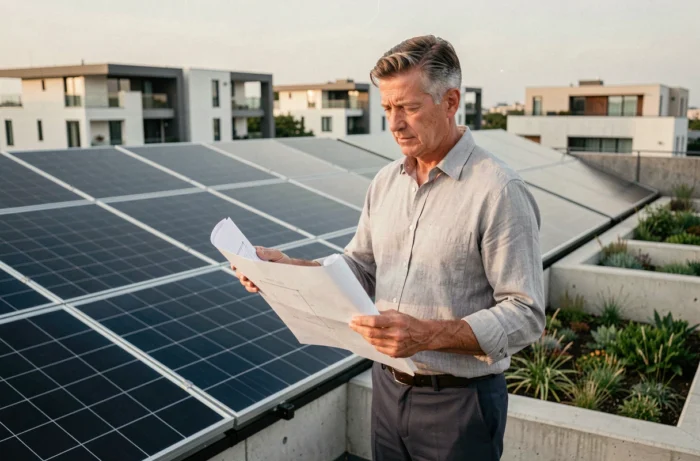
A roof that generates electricity changes the very nature of the building it covers. The property is no longer limited to its walls and location: it becomes an energy asset. Investing in solar real estate means acquiring or enhancing a built heritage, part of whose value is based on its ability to generate energy.
This convergence between real estate and photovoltaics reshapes the criteria for profitability, taxation, and regulatory compliance for both owners and investors.
Roof solarization obligations: what the law mandates starting in 2026
The legislative framework makes solarization mandatory for an increasing share of the real estate stock. The Climate and Resilience Law, supplemented by the APER law, sets a precise timeline.
New buildings with a footprint of more than 500 m² (shops, warehouses, offices, administrative, hospital, educational, and sports buildings) must incorporate a renewable energy production system or vegetation on a minimum portion of their roof. The trajectory is progressive: 30% of roof area equipped starting in 2024, 40% by July 1, 2026, and then 50% by July 1, 2027.
For the existing stock, the obligation extends from January 1, 2028, to the same categories of buildings over 500 m². Outdoor parking lots larger than 10,000 m² will be subject to a solar canopy obligation starting in 2026, which will gradually extend to parking lots between 1,500 and 10,000 m².
In practical terms, these obligations create a constant flow of new solar real estate assets. For an investor, this means that the value of a compliant building already includes an energy component, while a non-compliant building will need to undertake renovations, impacting its sale price. The resources available on the site energiesolaires fr allow for cross-referencing real estate data and the photovoltaic potential of a property before any commitment.
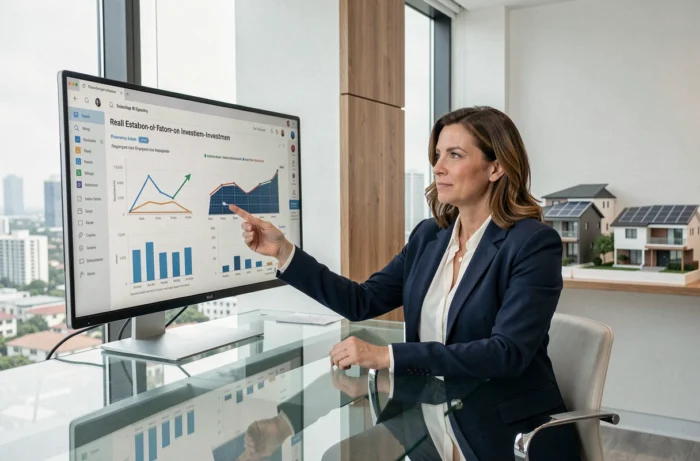
Impact of the solar DPE on property value
Have you noticed the letter displayed on a real estate listing? The energy performance diagnosis (DPE) directly influences the sale or rental price of a property. The integration of photovoltaic panels alters this ranking, sometimes significantly.
A property rated F or G (thermal sieve) loses value and faces restrictions on rental. A self-consumption solar installation can raise the DPE rating by one to two letters, depending on the installed area and the building’s consumption profile. The gain comes not only from the energy produced: the DPE takes into account the reduction of non-renewable primary energy consumption.
For a landlord, the difference between a property rated E and one rated C translates into a higher rent and better rental attractiveness. For a purchasing investor, identifying a poorly rated building with a well-oriented roof means spotting untapped energy appreciation potential.
Commercial leases and green clause
In commercial real estate, the green clause (or environmental annex) is mandatory for leases of spaces over 2,000 m². It commits both landlord and tenant to energy performance objectives. The photovoltaic installation becomes a negotiation lever in the commercial lease, as it directly contributes to the objectives of the tertiary decree, which mandates a gradual reduction in energy consumption.
A landlord who solarizes their roof can pass on part of the investment through the lease while offering the tenant a reduced energy charge. This mechanism makes solar real estate a dual-yield investment: rental and energy.
Collective self-consumption in co-ownership: an expanding model
Individual self-consumption is well documented. Collective self-consumption, however, opens a different field, particularly suited to co-ownerships and real estate complexes.
The principle is simple: a photovoltaic installation on the roof of a building supplies multiple homes or premises through shared production. Each participant consumes a portion of the electricity produced, proportional to a collectively defined distribution key.
- The co-ownership finances the installation through a vote in the general assembly, with the possibility of involving a third-party investor who installs and operates the panels at no initial cost to the co-owners.
- The production is distributed among participants according to a collective self-consumption contract declared with the network manager.
- The common electricity charges (common areas, elevator, lighting) decrease, which reduces quarterly funding calls.
This model transforms the roof of the co-ownership into a source of shared income or savings. For an investor holding multiple units in a building, it is a lever for enhancing property value that does not solely depend on the rental market.
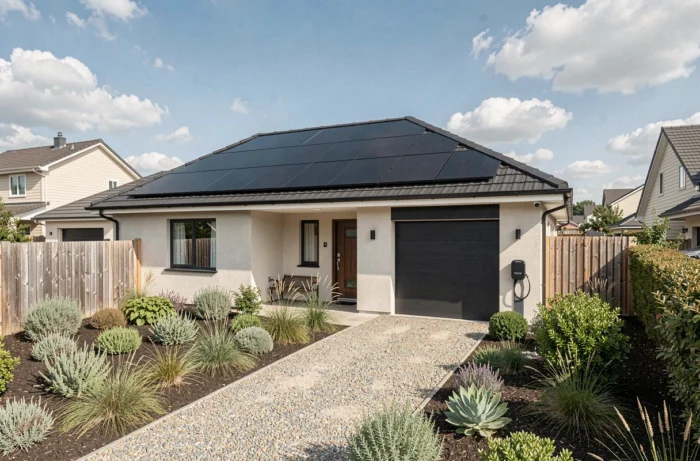
Profitability of solar real estate after the removal of the self-consumption bonus
Since the decree of June 1, 2026, the self-consumption bonus has been removed for all new applications. The buyback rate for surplus is now set at 1.1 euro cents per kWh through the EDF OA contract over 20 years. In other words, the resale of surplus no longer constitutes a significant profitability lever.
This change redistributes the cards. The financial performance of an installation now relies entirely on direct self-consumption: each kWh consumed on-site avoids purchasing a kWh at the network rate, which continues to trend upwards.
Why does this matter for the real estate investor? Because a building whose consumption profile coincides with solar production hours (offices, shops, refrigerated warehouses) increases the self-consumption rate and thus the actual yield of the installation. Conversely, a property occupied only in the evening benefits less from daytime production unless it includes a storage solution or a solar water heater programmed for daytime use.
- Favor buildings with daytime consumption to increase self-consumption.
- Size the installation based on actual consumption, not available roof area.
- Include maintenance costs (cleaning, inverter replacement after about ten years) in the profitability calculation.
A well-sized solar real estate asset remains profitable even without a bonus. The determining criterion is no longer public aid, but the alignment between the building’s consumption profile and the capacity of its installation.