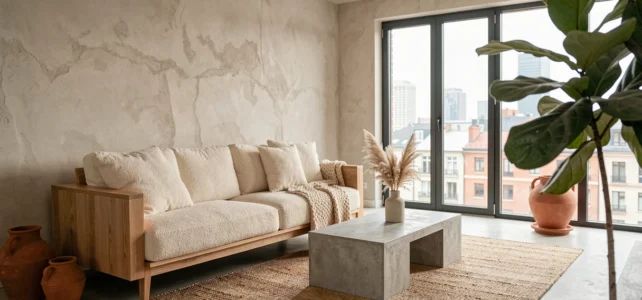
The decoration trends for 2024 are not just about a change in palette or a cyclical return to vintage styles. The real shift is happening in the technical formulations of materials, the depth of finishes, and an approach where thermal comfort meets aesthetics. We are observing a clear shift towards interior decoration choices that engage both material and style.
Bio-based paints: the technical turn that redefines decorative finishing
High-end wall decoration no longer relies solely on the chosen hue. It now depends on the chemical formulation of the applied product. Bio-based paints represent the most significant change in the decor market, and most trend guides overlook it.
Zolpan’s Bioalkyd paint, for example, is based on a resin made from 97% vegetable oil and food industry residues. This type of formulation offers a depth of finish that standard acrylics do not replicate: superior coverage, better resistance to yellowing, and a distinct texture.
The Argile brand, founded in 2006, offers paints made from over 95% bio-based vegetable oils, certified with the European Ecolabel. Its flagship product, Nature Velours, aims for a matte and silky finish designed for interior decoration. These references are not niche ecological products. They position themselves in the pure decorative segment, with arguments based on color depth and material quality.
We recommend considering these bio-based ranges not as an environmental compromise but as a finishing lever. To explore decoration options that integrate these material evolutions, brands like concept-deco.com allow for a blend of style and product quality.
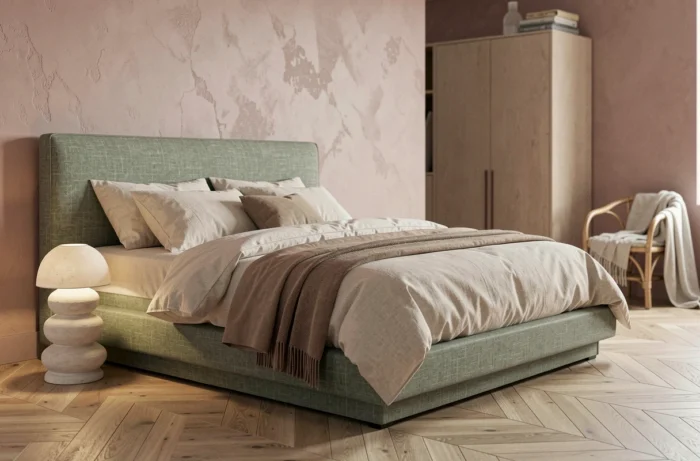
Decoration colors 2024: beyond the color chart, the question of the support
The dominant discourse on trend colors often limits itself to listing shades. Peach, terracotta, sage green: these palettes circulate widely. However, their actual rendering depends on the support and application technique, a point that mainstream articles consistently neglect.
A deep green applied as a lime wash on a slightly textured wall does not produce the same effect as an identical green in satin acrylic on a smooth drywall. The matte finish, the absorption capacity of the support, and the pigment granularity radically change the perception of the space.
For an interior where colors live up to their promises, we recommend reasoning by combining three parameters:
- The nature of the wall support (plaster, drywall, non-woven wallpaper, wood) which conditions the adhesion and depth of the hue
- The type of binder in the paint (acrylic, alkyd, lime, silicate) which determines the texture and light reflection
- The orientation of the room and the temperature of natural lighting, which can shift a warm hue to dull in north-facing exposure
This technical approach ensures that the colors chosen for your interior decoration retain their character once applied.
Natural materials and textures: what the French furniture market confirms
Wood, stone, linen: these natural materials dominate the decor trends for 2024 without surprise. What deserves attention is how the French furniture market is restructuring around this demand.
The furniture and interior design segment in France is experiencing a marked reorientation. Consumers are choosing fewer pieces but of better quality, with increased demands for the traceability of wood species and the durability of upholstery fabrics.
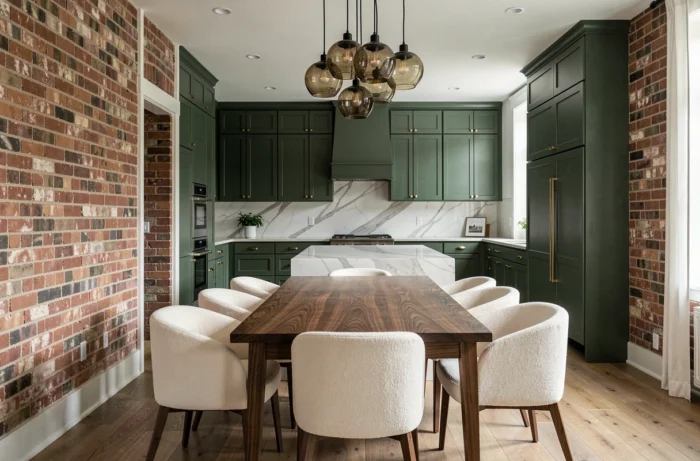
Corduroy and boucle remain safe bets for sofas and armchairs, but we are seeing a rise in quality finishes. Visible seams, brushed metal legs, and combinations of dark wood and light fabric reflect a style that focuses on contrasting materials rather than accumulating decorative elements.
Combining raw materials and contemporary lines
A common mistake is to stack natural materials without visual hierarchy. A solid oak tabletop on a black steel base is enough to anchor a dining room. Adding a rattan light fixture, a jute rug, and linen cushions creates a saturation that nullifies the desired effect.
The rule we apply: two dominant natural materials per room, no more. The rest of the ambiance is built through volumes and light, not by adding more textures.
Energy renovation and decoration: the constraint that guides interior design
Energy renovation of homes is no longer a topic separate from decoration. Interior insulation work modifies wall thicknesses, window frames, and sometimes ceiling heights. These technical constraints directly influence interior design choices.
An insulating layer of several centimeters reduces the usable space and alters the proportions of a room. Existing moldings disappear. Outlets and switches change position. The entire decorative project must be rethought after insulation, not before.
We recommend considering thermal renovation as the first act of the decoration project, not as a separate task. Choosing wall coverings, colors, and furniture before knowing the final dimensions of an insulated room is akin to decorating a space that does not yet exist.
- Validate the insulation plan and new dimensions before ordering custom furniture
- Anticipate the repositioning of light points, which conditions the ambiance of each area
- Prefer wall finishes compatible with insulation supports (some decorative coatings do not adhere to drywall without specific preparation)
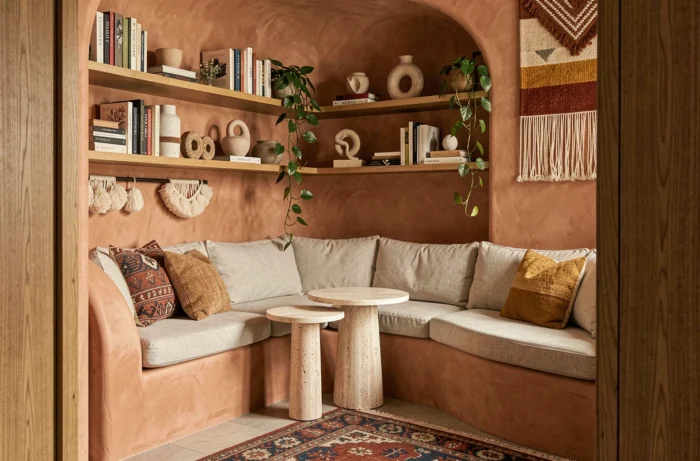
The decoration trends for 2024 gain relevance when they integrate these technical realities. A enhanced interior does not rely on the color of the moment or the pattern of the year, but on the coherence between material, support, and the actual proportions of the inhabited space.