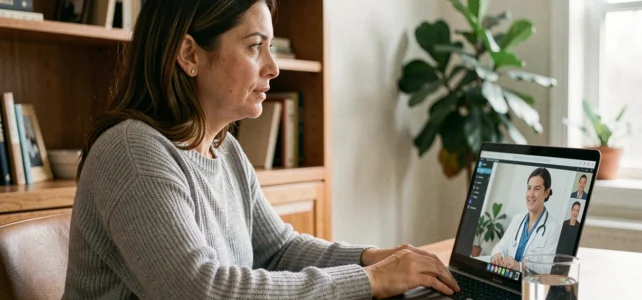
Online medical consultations have become a part of the healthcare habits of the French in just a few years. Since decree n° 2024-164 of February 29, 2024, regarding teleconsultation companies, commercial platforms wishing to be reimbursed by Health Insurance must meet enhanced requirements regarding quality, safety, and pricing transparency. This regulatory framework reshapes the contours of a practice whose usage continues to evolve.
Teleconsultation in commercial locations: an unknown prohibition
The recent overhaul of the Medical Code of Ethics has introduced an additional restriction: the practice of teleconsultation in commercial locations is now prohibited. Booths or kiosks set up in shopping malls and commercial centers can no longer host remote consultations.
However, teleconsultation booths located in pharmacies or authorized health facilities remain legal. The distinction may seem technical, but it reflects a clear intention to keep teleconsultation within a medical, not commercial, environment.
For patients, this rule means that a teleconsultation kiosk found in a supermarket does not meet the current ethical standards. Checking the location of a booth before using it is not a common reflex, and few platforms communicate on this point. A useful resource for delving deeper into the subject remains online medical prevention with En Pleine Santé, which details the criteria to check before consulting remotely.
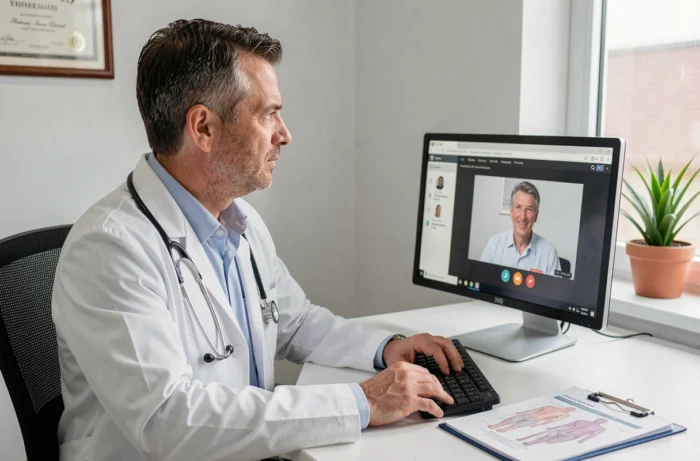
Online medical consultation and prevention: what distance really changes
Teleconsultation facilitates access to a doctor for common reasons: prescription renewal, interpretation of results, follow-up of stabilized chronic conditions. In these cases, the time savings are real, and the level of care is comparable to an in-office consultation.
Limits appear as soon as prevention requires a physical examination. A skin screening, abdominal palpation, or lung auscultation cannot be done through a screen. In-person consultation remains the reference act according to the 2026 recommendations of the National Council of the Order of Physicians, which remind that teleconsultation should remain minority and not exclusive in a doctor’s practice.
This institutional positioning is not anecdotal. It sets a clear limit to the idea that everything could be resolved via video. For effective prevention, online consultation works as a complement, not as a substitute.
The risk of underestimating symptoms
A doctor in a teleconsultation relies on what the patient shows and describes. The quality of the camera, lighting, and the patient’s ability to verbalize their symptoms directly influence the diagnosis. Some clinical signs are simply not detectable remotely, which can delay appropriate care.
Across a large volume of teleconsultations, the most commonly treated issues remotely remain benign conditions (ear infections, cystitis, insect bites), for which physical examination is less critical. The risk of underestimation increases with the complexity of the consultation reason.
Teleconsultation platforms: pricing transparency and reimbursement
The 2024 decree requires teleconsultation companies to charge only conventional rates to be reimbursed. Additional fees can only concern truly optional services, clearly announced to the patient before the consultation.
A survey by France Assos Santé published in July 2026 highlights the persistence of questionable pricing practices on certain platforms. Poorly identified additional fees, subscriptions presented as mandatory, or consultations charged beyond the conventional rate continue to be reported.
Before choosing a platform, several points deserve verification:
- The displayed rate corresponds to the conventional consultation rate (general practitioner or specialist), without hidden surcharges under vague labels.
- The doctor is registered with the Order of Physicians, and medical confidentiality is guaranteed by a secure video exchange, compliant with current standards.
- Any optional services (priority access, medical concierge service) are clearly distinguished from the medical act itself.
Connected devices and remote monitoring: a still limited complement
Connected blood pressure monitors, oximeters, glucometers transmitting data in real-time to the doctor: these devices enrich teleconsultation by providing objective measurements that the screen alone cannot capture. Their use is growing in the monitoring of chronic diseases, where the regularity of readings is as important as the occasional examination.
Digital therapies are beginning to be reimbursed in France, opening a new field for remote prevention. These clinically validated programs support the patient between two consultations for conditions like diabetes or chronic insomnia.
The long-term impact of these tools on the quality of prevention remains to be measured. Their deployment is uneven across territories and medical specialties. The potential exists, but the clinical evaluation of these devices is still ongoing for the majority of them.
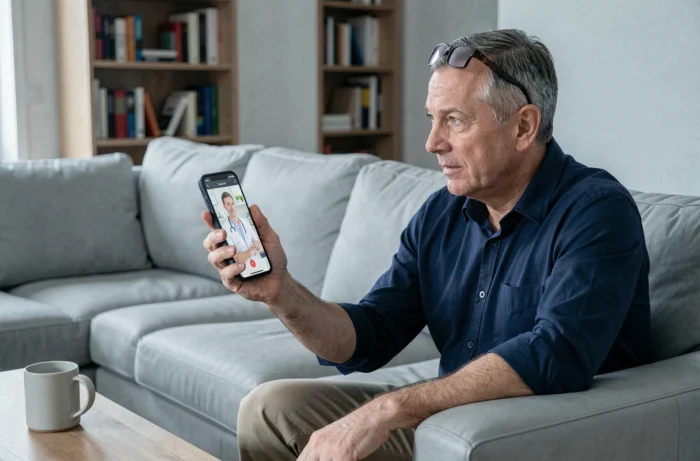
Medical deserts and teleconsultation: a partial response
The most frequently cited argument in favor of online medical consultation concerns access to care in under-resourced areas. For a patient without a primary care physician within a reasonable distance, teleconsultation sometimes represents the only quick option for a non-urgent health issue.
This reality should not obscure a structural limit. Teleconsultation does not create additional doctors. It redistributes existing medical time to patients who would not otherwise have access, but it does not solve the shortage itself.
In the most isolated areas, teleconsultation booths in pharmacies offer an interesting compromise: the pharmacist assists the patient, manipulates a connected stethoscope or otoscope, and the remote doctor has more reliable clinical data than in a simple video call. This assisted model in pharmacies represents the most advanced format of teleconsultation for areas where in-person visits are lacking.
Online medical consultation is gaining regulatory oversight and technical maturity. The framework established by the 2024 decree and the 2026 ordinal recommendations sets safeguards that did not exist a few years ago. For prevention, the most relevant model combines occasional teleconsultation, monitoring by connected devices, and regular in-person consultations, each channel covering what the other cannot do.