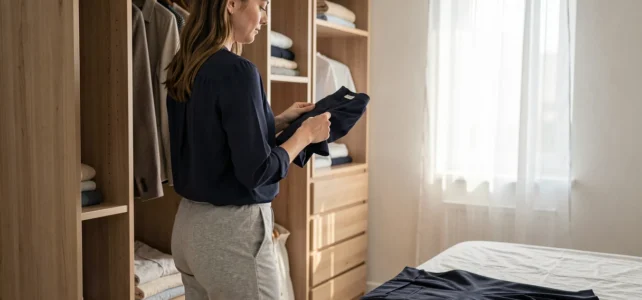
Arriving at a correctional facility with a metal underwire bra or a large-buckle belt risks setting off the metal detector and losing precious visiting minutes. The dress code for a visiting room is not about style but about operational constraints related to security checks.
Each facility has its own internal regulations, which can make generic advice sometimes misleading. It’s better to understand the logic behind the restrictions to adapt your wardrobe once and for all.
Security metal detector at the visiting room: what really triggers a denial
Most denials or delays at the entrance of a visiting room are not related to clothing style. They come from metal elements that the visitor did not anticipate. The detector picks up jean rivets, underwire bra stays, thick zippers, shoe eyelets, and belt buckles.
Specifically, you pass the check faster by wearing clothes without metal or underwire. Elastic-waist pants, slip-on sneakers without eyelets, a sports bra without underwire: these choices are not about modesty or discretion, but about smooth passage through the detector.
Accessories pose the same problem. Watches, bracelets, bulky rings, metal hair clips, and non-removable piercings can all trigger a secondary check or even a pat-down. The less metal you wear, the quicker the check goes. To delve deeper into this point and discover the list of prison clothing on Les Humeurs de Gloupsy Chérie, the experiences compiled there largely corroborate these field observations.
Internal regulations of the correctional facility: why rules vary
There is no uniform national dress code for visitors. Each facility sets its own restrictions in its internal regulations, under the authority of the facility head. What is acceptable in one detention center may be denied in a neighboring facility.

Some facilities prohibit short skirts, deep necklines, or transparent clothing. Others focus solely on elements that could compromise security. Feedback varies on this point, and the only reliable approach is to contact the family reception or visiting services before the first visit.
Some constants can be found in most facilities:
- Clothing colors close to the staff uniform (dark navy blue, all black depending on the site) are sometimes discouraged to avoid any visual confusion in the hallways.
- Thick-soled or wedge shoes may be denied because they offer a potential hiding place, not for style reasons.
- Long coats or very loose clothing are sometimes checked more closely because they complicate the detection of concealed items.
Requesting the internal regulations in advance can help avoid a nasty surprise on the day. The prison administration does not always have a public document online, but a call is usually sufficient.
Comfortable visiting attire: what is often overlooked
Beyond passing through the detector, you remain seated in a visiting room for a duration that can feel long on an uncomfortable chair. The comfort of the clothing matters as much as its compliance. Tight pants or new shoes that hurt can turn the reunion moment into a physical ordeal.
Visiting rooms are often poorly ventilated in summer and chilly in winter. Layering a t-shirt and a light cardigan (without a metal zipper) provides more flexibility than a thick sweater that cannot be removed. In summer, a short-sleeved cotton top remains the simplest choice.
A detail often overlooked: pockets. Visitors must leave all personal belongings in the locker (phone, keys, wallet). Keeping a pocket for a tissue or an ID document simplifies the process, but everything else goes into the locker. Choosing functional clothing with minimal pockets avoids unnecessary searches.
Prohibited items in the visiting room and the boundary with clothing
Confusion between clothing and personal items is common during a first visit. Direct deliveries to the visiting room (money, food, mail, clothing for the inmate) are regulated or prohibited in most facilities. These items must go through separate channels, usually the mail officer or a dedicated laundry drop-off system.
Bringing clean clothes for an inmate does not happen in the visiting room itself. The laundry goes through a separate check, with specific rules on the types of clothing accepted (no hoods, no drawstrings, no underwire underwear in some cases). The laundry deposited for an inmate follows a different circuit than that of the visitor.
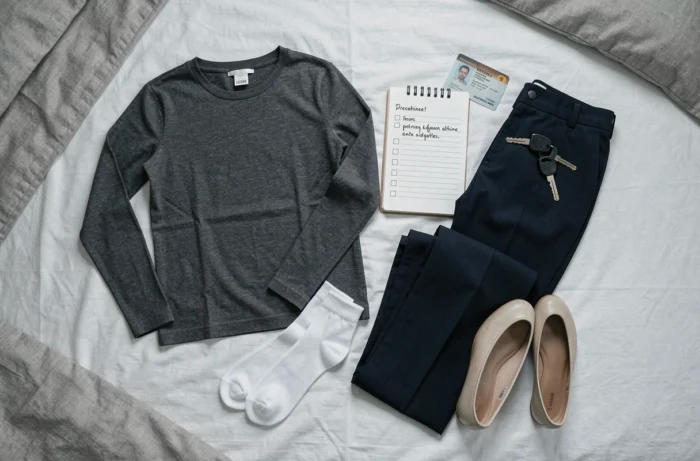
For visitors, the practical rule can be summed up in one sentence: you enter with your ID and, in some facilities, your visiting permit. Nothing else passes through the door of the visiting room.
Preparing your outfit the night before to avoid stress on visiting day
Preparing your clothes the night before allows you to check every detail without the morning pressure. You can run a magnet along the seams to spot discreet metal elements (hidden rivets, pant clips). Test the shoes by shaking them to hear if anything rattles.
- Choose a non-underwire bra or a sports bra made of fabric.
- Opt for slip-on shoes, without metal laces or thick wedge soles.
- Remove any unnecessary jewelry before leaving, not while waiting in line in front of the facility.
- Bring a transparent plastic bag if the facility requires it for items left in the locker.
This preparation takes a few minutes and significantly reduces the risk of complications at the entrance. After two or three visits, the reflex sets in, and clothing questions no longer generate anxiety.
The visiting room remains above all a moment of connection. An outfit adapted to the security constraints of the correctional facility allows you to focus on the exchange rather than the logistics. The simplest option: a flexible garment, without metal, in which you feel like yourself.