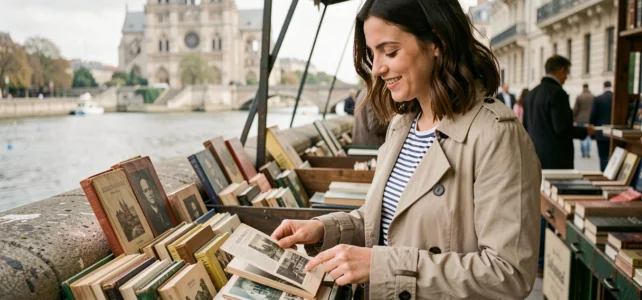
Paris welcomes several tens of millions of visitors each year, but a large portion of them focuses on the same monuments and neighborhoods. Experiencing Paris differently means exploiting the flaws in this pattern: rethought transportation methods, neighborhoods away from the crowds, and recent pricing structures that open doors previously closed to hurried visitors.
Transportation pricing reform: what it changes for exploring Paris differently
The pricing reform implemented in 2025 unified the transport zones in Île-de-France and simplified travel tickets. Airport tickets, day passes, weekly passes: excursions outside the hyper-center are now cheaper and no longer require calculating zone supplements.
In practical terms, a trip to Versailles or the green outskirts of the region costs the same as an intra-city journey. This standardization makes destinations accessible that most Parisian tips guides overlook, as they focus on the unusual spots in the center.
To spot the good deals related to this evolution, resources like parisastuce.fr compile transport tips, free outings, and lesser-known activities around the capital.
The weekly pass, in particular, transforms the logic of stays. Instead of being confined to the central districts, a visitor can extend their reach to Seine-et-Marne or Yvelines without extra cost. The banks of the Marne, the state forests, or the small towns of Île-de-France become natural extensions of the Parisian stay.
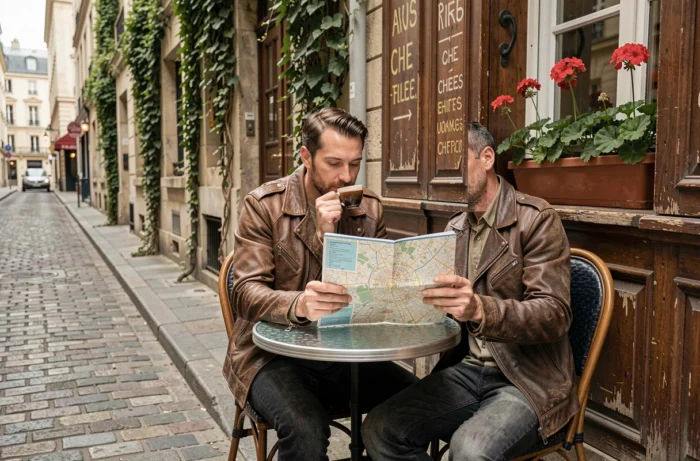
Paris by bike: a rapidly expanding cycling network
The City of Paris aims for about 1,500 km of dedicated cycling infrastructure by 2030. Since 2024, the network’s growth has been noticeable, and the use of bicycles by tourists is documented to be increasing, according to Euronews Travel.
Biking changes the way to discover the capital. Where the metro imposes underground journeys and transfers, the two-wheeler allows crossing entire neighborhoods without planning. One can move from the Marais to the Ourcq canal, then from Villette to Buttes-Chaumont, following the paths without consulting a map.
Routes to favor away from tourist axes
The paths along the Seine remain pleasant, but cyclists seeking tranquility should ride along the Saint-Martin canal early in the morning, or head northeast of Paris, towards the 19th and 20th arrondissements. These neighborhoods have few famous monuments but offer a different perspective of the city: street art, neighborhood markets, elevated parks.
- The Ourcq canal to Pantin, accessible by a continuous path, combines repurposed industrial architecture and guinguettes
- The Petite Ceinture, an old railway partially open to walkers, crosses sections of the 12th, 13th, and 15th arrondissements in an unexpectedly green atmosphere
- The landscaped banks on the left bank between the Musée d’Orsay and the Bibliothèque nationale de France, pedestrian and bike-friendly, avoid the crowds of the right bank
Unknown neighborhoods and arrondissements: where to go in Paris without the crowd
The 13th arrondissement has the greatest cultural diversity in the capital. The Chapelle neighborhood, in the 10th, is home to an Indian and Sri Lankan community whose shops, restaurants, and temples transform a few streets into a complete change of scenery, without a plane ticket.
This type of micro-neighborhood does not appear in any ranking of unusual places because it lacks spectacular tourist appeal. The value lies in the daily experience: eating a dosa on the go, buying bulk spices, observing the rituals of a Tamil temple.
The Marais beyond the known addresses
The Marais remains one of the most frequented neighborhoods in Paris, but its northern part (upper Marais, towards Arts et Métiers) retains quiet streets. The independent art galleries on rue de Turenne or rue Charlot frequently change exhibitions. Entering these galleries is free and does not require a reservation, making them a concrete alternative to crowded museums.
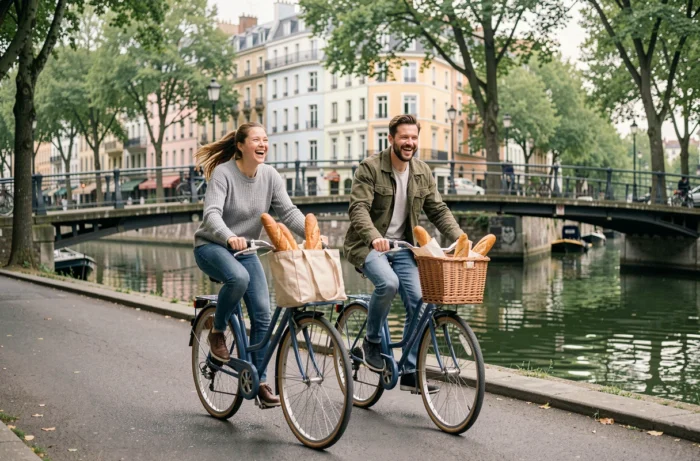
Free outings and low-cost activities in the capital
Paris offers a considerable number of free outings, but their visibility remains low. On the first Sunday of the month, several national museums open their doors free of charge. This information is known, but few visitors are aware that some municipal cultural venues are free all year round, such as the Petit Palais or the Musée d’Art moderne de la Ville de Paris.
Neighborhood festivals and ephemeral events also deserve attention. In September, events like the Place Festival in the 13th arrondissement or Châtelet-en-Fête offer free dance and music programs.
- Municipal museums that are permanently free: permanent collections of the Petit Palais, the Musée d’Art moderne, the Musée Carnavalet
- Free guided walks organized by local associations in several arrondissements
- Open-air food markets (Bastille, Aligre, Belleville) where strolling costs nothing and provides a direct glimpse into neighborhood life
Free does not mean lack of quality. The Petit Palais, for example, houses collections ranging from Antiquity to the early 20th century in a remarkable Beaux-Arts building. The difference with the Louvre or Orsay mainly lies in the attendance: the rooms remain calm even on weekends.
Experiencing Paris differently relies less on discovering secret places than on a change of logic. Using a bike instead of the metro, taking advantage of the pricing reform to venture out of the center, prioritizing free municipal museums over the queues at major establishments: these simple choices radically alter the experience of a stay in the capital.