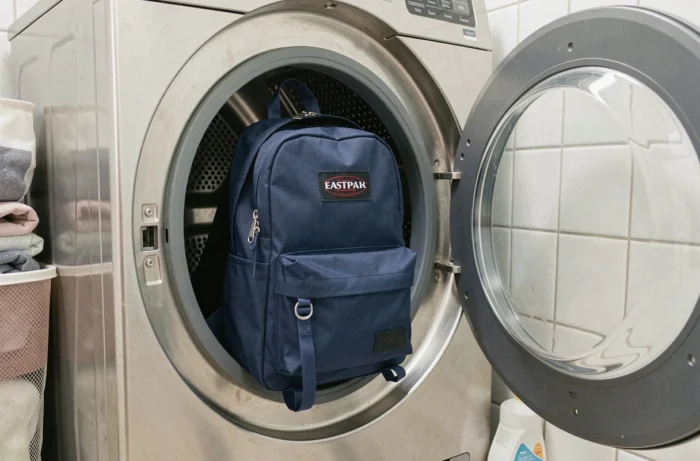
An Eastpak bag stained after a school year or a trip resonates with everyone. The natural reflex: throw it in the washing machine with the rest of the laundry. The problem is that this simple action can detach the inner linings, deform the straps, or dull the fabric. The good news: with a few precautions, washing your Eastpak bag in the machine is entirely possible for most polyester or nylon models.
What the fabric of your Eastpak bag can really tolerate
Before touching the washing machine, check the label sewn inside the bag. It indicates the fabric composition and the manufacturer’s instructions. On recent models, Eastpak tends towards a more marked caution on new references, with explicit mentions against machine washing on certain ranges.
The classic Eastpak bags (Padded Pak’r, Out of Office) are mostly made of Cordura polyester. This fabric can withstand a machine wash at low temperature. However, leather models or those with leather elements (bottom, handle) should never go in. Leather shrinks and cracks under the effect of water and mechanical agitation.
Do you have a model from the Resist’r range or a bag with a water-repellent coating? Eastpak recommends for these references a localized cleaning rather than a full wash. The protective coating deteriorates in the machine, even on a cold cycle. A damp cloth with a bit of mild soap is sufficient for these bags.
If you want to delve deeper into the method before diving in, a detailed guide explains how to wash your Eastpak bag in the machine depending on the model and fabric.
Preparing the Eastpak bag before machine washing
This step makes all the difference between a bag that comes out clean and one that comes out damaged. Empty every pocket, including the zipped compartments where crumbs, forgotten pens, and small change accumulate. A hard object left in a pocket can puncture the fabric during the spin cycle.
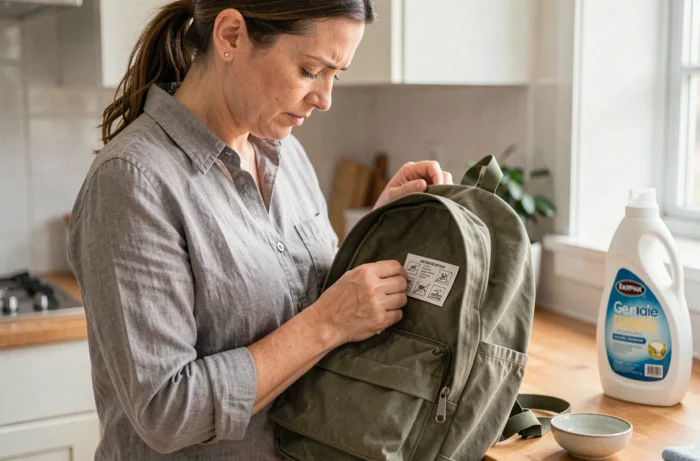
Here are the steps to systematically take before putting the bag in the drum:
- Turn the bag inside out to protect the outer face and any prints from rubbing against the drum.
- Close all zippers. An open zipper can catch the fabric and twist under centrifugal force.
- Place the bag in a pillowcase or a laundry net. This protection limits direct shocks and prevents the straps from wrapping around the drum axis.
- Detach removable elements (keychains, adjustable straps, back frame if the model has one) and wash them separately by hand.
A stain pre-treatment before machine washing significantly improves the result. Rub the dirty areas with a damp Marseille soap or a bit of dish soap, then let it sit for about ten minutes.
Machine settings and washing product for a backpack
The choice of program is the critical point. Select a delicate cycle at a maximum of 30 °C, with a reduced spin. A too powerful spin can deform the structural seams and tear the heat-sealed reinforcements of the straps.
On the product side, use a mild liquid detergent, without bleaching agents. Powder detergents leave white residues in the seams and corners of the bag, especially on dark fabrics. Also avoid fabric softener: it leaves a greasy film that alters the breathability of the fabric and reduces the effectiveness of water-repellent treatments.
You can add one or two towels in the drum. They act as shock absorbers and prevent the bag from banging against the metal walls during the cycle.
Drying the Eastpak bag: heat is the real danger
Here’s the trap that many underestimate. Never put an Eastpak bag in the dryer. Eastpak explicitly states this on its recent product pages. The heat from the drum damages the inner coatings, melts heat-sealed elements, and deforms plastic zippers.
Gregory Packs, another backpack manufacturer, also prohibits the dryer for the same reasons: heat destroys the protective coatings of the fabric. This is not an excessive precaution; it’s a technical constraint related to the materials used by the entire industry.
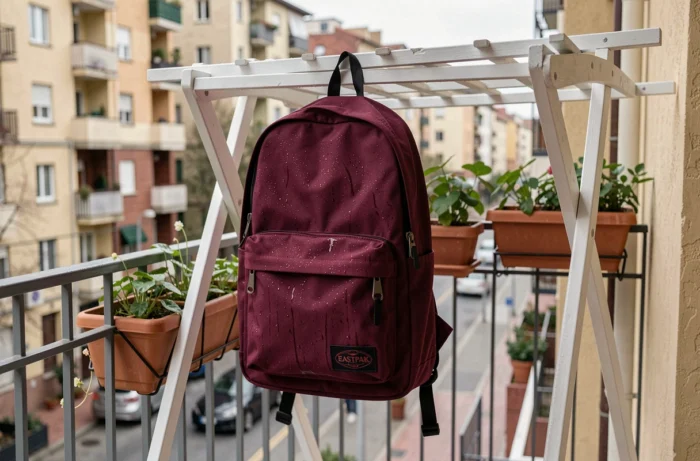
The correct drying method is simple. Turn the bag right side out, open all pockets, and hang it upside down on a sturdy hanger or rod, in a ventilated area and out of direct sunlight. Complete drying usually takes one to two days depending on the thickness of the fabric and the ambient humidity.
Inserting crumpled newspaper inside the compartments speeds up drying and helps the bag maintain its shape while drying. Change the paper after a few hours if it becomes saturated with moisture.
Regular maintenance to space out machine washes
A machine wash remains an operation to limit. Each cycle wears down the seams and the coating a bit. A regular localized cleaning prevents the need to wash the entire bag.
For everyday stains (ink, food, dirt), a damp microfiber cloth with a mixture of warm water and mild soap handles most situations. Gently rub without soaking the fabric, then dab with a dry cloth.
Persistent odors inside the bag can be treated without water. Sprinkle baking soda in each compartment, let it sit overnight, then vacuum or shake out the bag the next day. This method absorbs odors without wetting the fabric or stressing the seams.
A well-maintained Eastpak bag between washes requires only one or two machine washes per year, even with daily use. The Cordura fabric used on most models is designed to withstand abrasion, not repeated washing cycles. Preserving the coating and seams also preserves the manufacturer’s warranty.