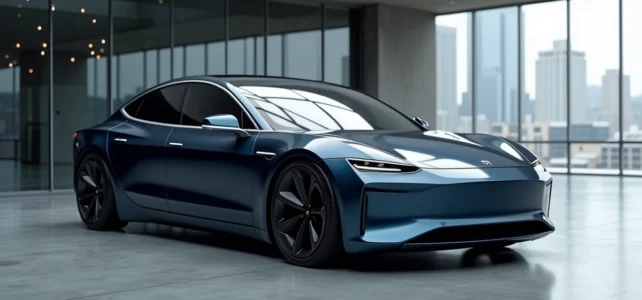
The European automotive market is undergoing a rapid restructuring phase. Electrification of powertrains, bidirectional charging, dual-clutch transmission, stricter technical inspections: these changes are simultaneously affecting mechanics, energy, and regulations. Measuring these automotive trends by their concrete effects on sold vehicles and deployed infrastructures allows us to distinguish truly adopted innovations from announcements that remain at the prototype stage.
Bidirectional Charging V2G: The Electric Car Becomes an Energy Asset
General articles on automotive innovation mention fast charging. They overlook a paradigm shift: the electric car now returns energy to the grid. At the Power2Drive 2026 show in Munich, several manufacturers presented commercial solutions for bidirectional charging (Vehicle-to-Grid), featuring bidirectional DC charging stations, compatible vehicles, and associated energy offers.
The principle goes beyond mere convenience for the driver. An electric vehicle parked for most of the day can power a building or inject electricity into the grid during peak hours. The business model relies on the price difference between off-peak hours (energy purchase) and peak hours (resale). For fleet managers, this capability transforms each vehicle into a remotely controllable mobile battery.
Keeping up with the news about cars on Le Blog Auto Mag helps identify V2G compatible models as they hit the market.
The 2026 trend is not limited to V2G. Smart charging (intelligent charge management), megawatt charging for heavy trucks, and stationary batteries coupled with electric vehicle fleets are shaping an ecosystem where mobility and energy management merge.
French Automotive Market: Electric Powertrains vs. Thermal in 2025-2026
Market data from AAA Data allows for a comparison of dynamics between powertrains over recent years in the French automotive market.
| Criterion | Thermal Vehicles | Electric Vehicles |
|---|---|---|
| Market Share (trend) | Gradually declining | Regularly increasing |
| Average Price of New | Stable to high | Decreasing thanks to new models |
| Cost of Use (energy + maintenance) | Fuel + frequent oil changes | Electricity + reduced maintenance |
| Associated Infrastructure | Mature station network | Rapidly expanding charging station network |
| Residual Value | Classic depreciation | Variable depending on battery capacity |
L’Usine Nouvelle reports a slight return to growth in the automotive market in 2026, month by month. Manufacturers are multiplying affordable electric models to attract buyers who hesitated due to the initial cost. However, the used electric vehicle market remains poorly structured, with significant price discrepancies depending on battery condition and the absence of a reliable central aggregator.
Automotive Transmissions: The Clutch Evolves with Electrification
Electrification is not limited to replacing a thermal engine with an electric one. It profoundly alters transmission systems. Hybrid vehicles, which combine both types of powertrains, require clutches capable of managing smooth transitions between electric and thermal sources.
Recent developments in clutch mechanisms focus on three areas:
- Dual-clutch transmissions, which eliminate downtime during gear changes and improve the overall energy efficiency of hybrid vehicles
- Longer-lasting friction materials, suited to the more frequent engagement cycles imposed by electronic management of the powertrain
- Dedicated gearboxes for 100% electric vehicles, often with a single ratio, which simplify the kinematic chain and reduce mechanical losses
The global automotive transmission market continues to grow, driven by demand for hybrid systems. Manufacturers are investing in transmissions specific to each architecture (pure thermal, plug-in hybrid, pure electric) rather than a universal solution.
Technical Inspections and Regulations: What Changes for Drivers
A future European directive is preparing structural changes to technical inspections. The stated goal is to adapt the inspection points to the new technologies embedded in vehicles: advanced driver assistance systems (ADAS), high-voltage batteries, engine management software.
Technical inspection centers are anticipating these changes by training their operators on the specifics of electric and hybrid vehicles. Checking the insulation of a high-voltage circuit or the condition of a battery pack does not require the same skills as inspecting an exhaust system.
For electric vehicle owners, the question of compliance with administrative documents also arises. Registration certificates now mention specific categories, and information related to the energy source influences the amount of certain regional taxes. An error on these documents can complicate resale or registration in another European country.
Circular Mobility and Sustainable Automotive Industry
Six startups selected by The Future is Neutral’s Innovation Hub are working on circular mobility: recycling materials, refurbishing parts, reusing batteries. This industrial sector addresses an increasingly visible constraint.
Electric vehicle batteries at the end of their first life retain sufficient capacity for stationary uses (solar energy storage, backup power). Recycling them directly would waste a still usable resource. Refurbishing extends their total usage duration and improves the environmental balance of the vehicle over its entire life cycle.
- Recycling rare metals (lithium, cobalt, nickel) reduces dependence on imports and stabilizes production costs for new batteries
- Refurbishing mechanical parts (gearboxes, alternators, air conditioning compressors) feeds a less costly repair market for motorists
- Digital traceability of components, via product passports, facilitates the management of second life and sorting at the end of the cycle
The automotive industry is gradually integrating circularity into its value chain, not only out of ecological conviction but also because the cost of raw materials compels it.
The coming months will determine whether bidirectional charging moves beyond the demonstration stage to become part of daily use. The French automotive market, meanwhile, remains dependent on the affordability of new electric models and the structuring of the used market. The ability of manufacturers to offer affordable vehicles will decide the actual pace of the transition.