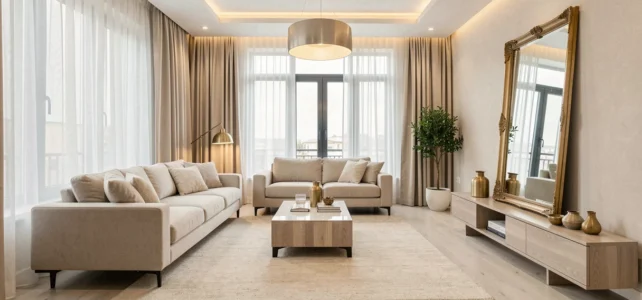
A dark room alters the perception of space, and according to recent studies, exposure to brighter light during the day is associated with a measurable improvement in mood and energy. Making a room brighter is therefore not just a matter of decoration. Here are ten concrete levers to transform a poorly lit interior, prioritizing passive strategies that limit dependence on artificial lighting.
1. Off-white satin paint on the ceiling
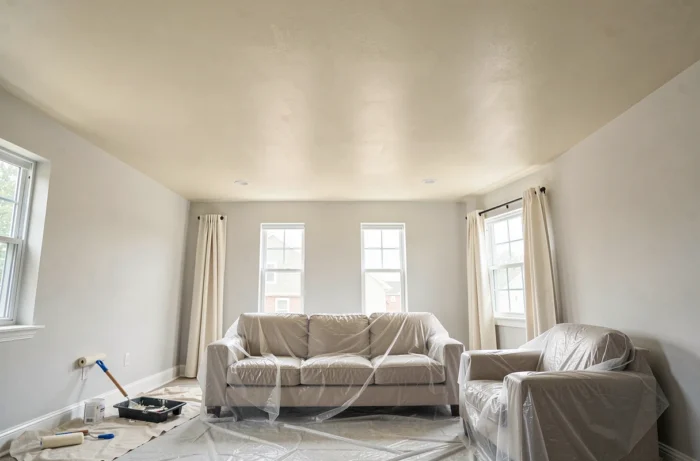
The ceiling is the largest reflective surface in a room, and most dark interiors overlook it. A satin finish rather than a matte one reflects more light downwards, as the micro-reliefs of matte paint absorb some of the rays instead of redistributing them.
Off-white (ivory, linen, eggshell) avoids the clinical effect of pure white while maintaining a high reflection rate. For north-facing rooms, a slightly pinkish white compensates for the bluish tint of natural light.
If you’re looking for more tips to brighten a dark room, the principle remains the same: every surface counts, and the ceiling offers the best light yield per square meter treated.
2. Large mirror facing the window
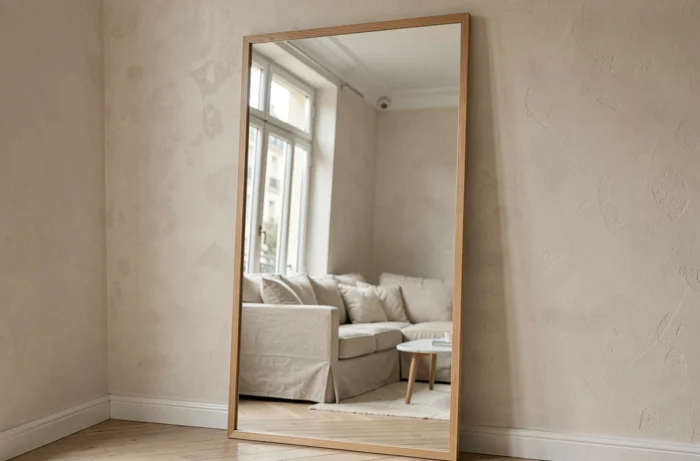
Placing a mirror on the wall opposite the source of natural light creates a second virtual opening. The mirror captures incoming rays and redistributes them into the depth of the room.
Size matters: a mirror less than 50 cm on each side produces a decorative effect, not a luminous one. For a real gain, a mirror at least one meter high placed halfway up the wall maximizes the reflection area. Several small mirrors grouped in a wall composition also work, provided they cover an equivalent surface.
3. Natural light reflector on the windowsill
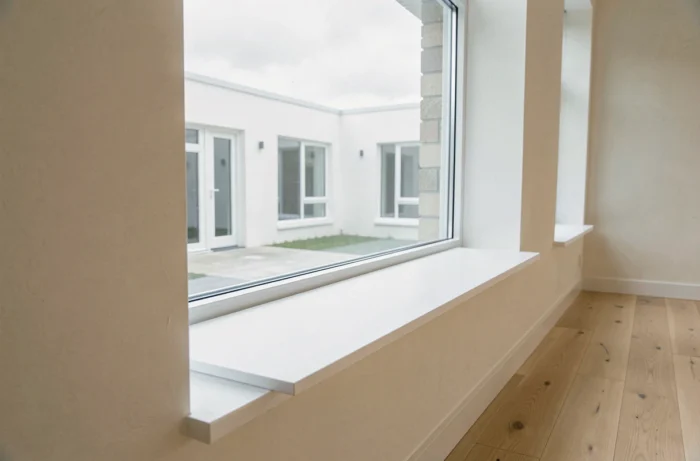
The light reflector is a micro-prismatic surface panel that sits on the exterior or interior sill of the window. It captures light from the sky and redirects it to the ceiling, which then diffuses it throughout the room.
This passive solution is particularly suitable for ground floors facing each other or for windows partially obstructed by a balcony. Unlike artificial lighting, the reflector consumes no electricity and amplifies the available natural light without altering the architecture.
4. Light voile curtains to clear the windows
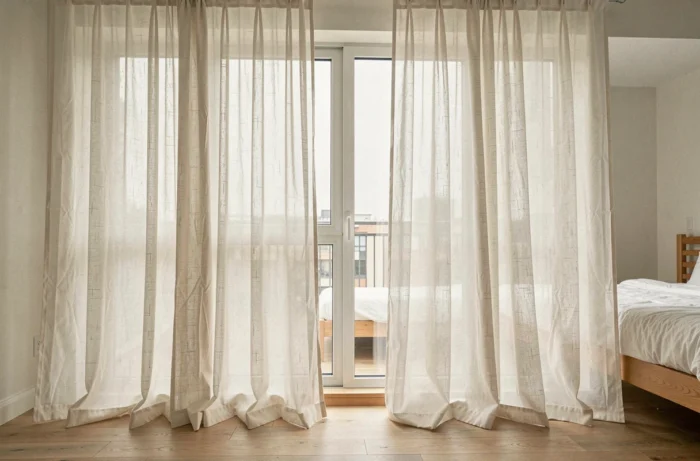
Opaque or lined curtains can absorb most of the incoming brightness, even when open. The fabric creates a dark frame that visually reduces the size of the opening.
Replacing thick curtains with a light linen or semi-transparent cotton voile radically changes the situation. The rod should extend beyond the window frame on each side so that the fabric, when drawn, does not cover any part of the glazing. This installation detail makes all the difference.
5. Light flooring in bleached wood or beige tiles
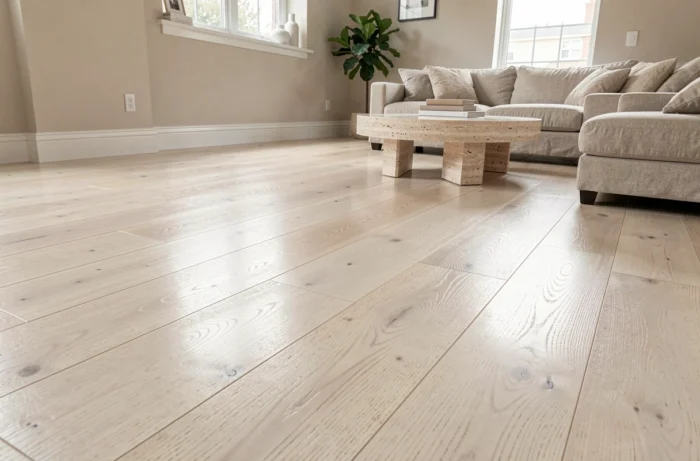
The floor represents the second largest surface in a room after the ceiling. A dark parquet or anthracite tiles absorb light instead of reflecting it back to the walls and furniture.
A light floor (bleached wood, natural oak, beige tiles, light polished concrete) reflects a significant portion of ambient light. For renters who cannot change the flooring, a large light rug made of natural fibers covering the central area produces a similar effect.
6. Interior glass partition or windowed wall to redistribute light
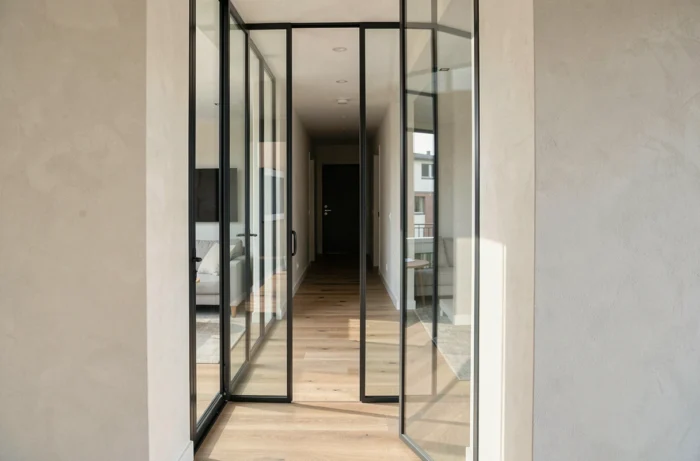
When a dark room adjoins a well-lit room, the solid partition between the two acts as a light barrier. Replacing all or part of this partition with an interior glass wall or a glass door allows light to pass through.
The steel-and-glass workshop-style partition remains the most common solution, but a simple glass transom above an existing door is sometimes sufficient. The goal is to create a light passage without removing acoustic separation.
7. Warm white LED lighting, multiplied in low sources
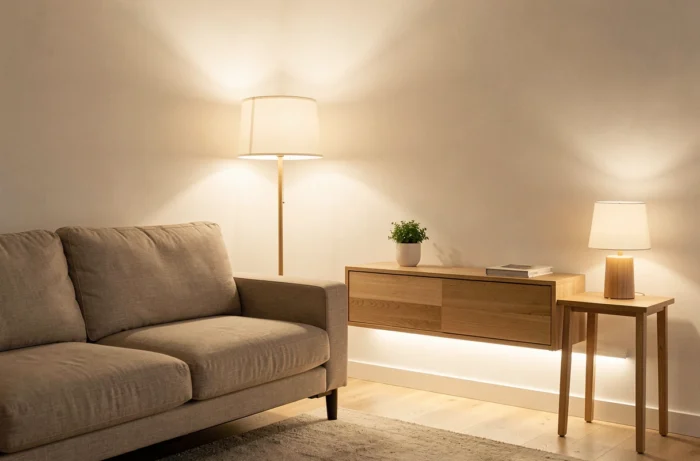
A single ceiling light produces vertical lighting that leaves corners in shadow. Multiplying low sources (table lamps, floor lamps, wall sconces) distributes light horizontally and eliminates dark areas.
LEDs allow for precise selection of color temperature. For a welcoming atmosphere:
- Living room and bedroom: between 2,700 and 3,000 kelvins (warm white), which reproduces the warmth of late afternoon natural light
- Kitchen and office: up to 4,000 kelvins (neutral white) for functional lighting without excessive coldness
- Hallway and entrance: a wall sconce oriented upwards bounces off the light ceiling and avoids the tunnel effect
8. Low and suspended furniture to free up the light field
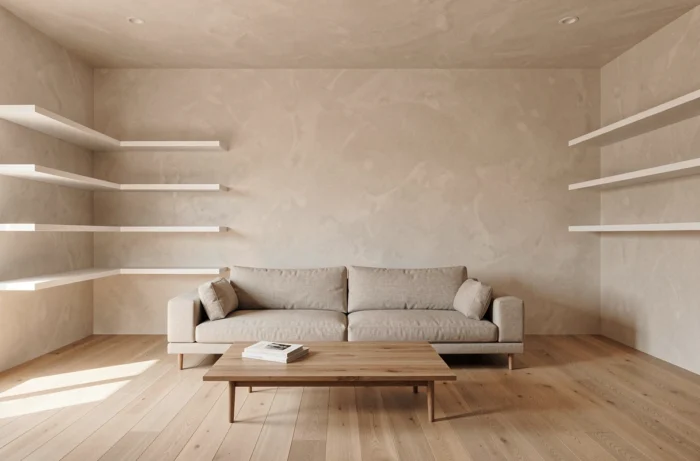
A tall, bulky piece of furniture placed near a window blocks the lateral diffusion of light. Reducing the height of furniture or choosing suspended pieces (vanity unit, floating console) allows light to circulate under and around the volumes.
Visible legs on a sofa or sideboard produce the same effect: the floor remains visible, light passes underneath, and the space appears larger. The less furniture touches the floor, the more light spreads.
9. Decorative objects in brass, glass, and metallic surfaces
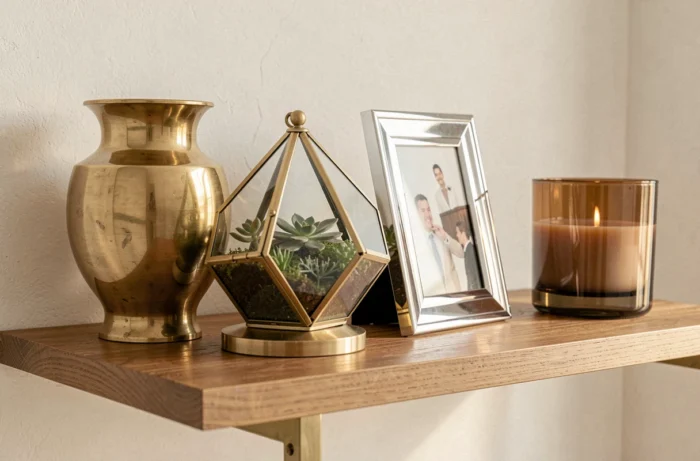
Shiny materials (brass, copper, glass, brushed stainless steel) capture and redistribute ambient light through micro-reflections. A transparent glass vase on a shelf, a brass frame, a chrome floor lamp act as small light relays.
The principle works as long as the room is not overloaded. Three or four well-distributed reflective objects are sufficient. Beyond that, accumulation produces a confusing visual effect that cancels out the light benefit.
10. Day-night lighting scheme adapted to the circadian rhythm
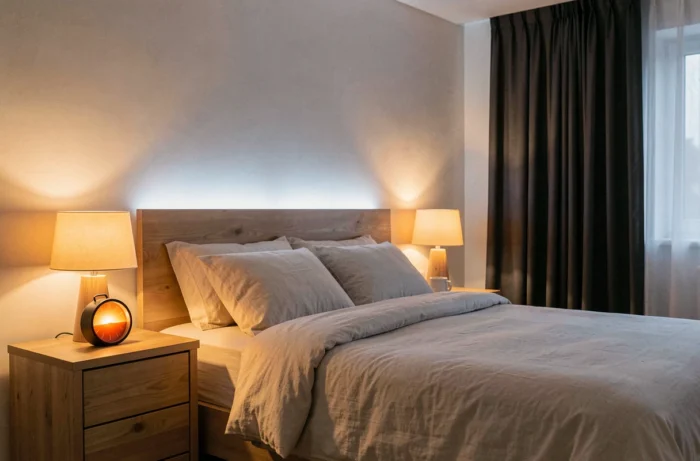
Lighting experts recommend a 24-hour scheme based on the principle “bright days, dark nights”: a bright indoor light during the day, significantly dimmed in the evening, and near darkness during sleep. This light rhythm supports the circadian cycle, sleep, and mental health.
In practice, this means maximizing both natural and artificial brightness during active hours (all the previous tips contribute to this), then switching to dimmed and warm sources after sunset. A dimmer on the main fixtures or connected LED bulbs with scheduled programming make this scheme easy to implement daily.
The brightness of a room is built up through the accumulation of small levers, not by a single spectacular gesture. Starting with the ceiling and windows yields the most visible results, as these are the surfaces that interact directly with natural light. The rest (furniture, decor, artificial lighting) complements an already transformed base.